A Comprehensive Analysis of Oil-Immersed Transformers: From Technological Advantages to Market Trends – A Review of Haiyifeng's Overseas Blog
Driven by both global energy transition and grid upgrades, transformers, as core equipment in power systems, are experiencing a new round of demand growth. Among them, oil-immersed transformers have long held a dominant market position due to their high cost-effectiveness, excellent heat dissipation performance, and wide voltage coverage. Recently, Haiyifeng published a blog post titled "Oil-immersed Transformer" on its official website, providing a systematic introduction to this type of product. This article, combining the content of this blog post, third-party industry data, and technical comparisons, provides a comprehensive understanding of the true nature of oil-immersed transformers and analyzes Haiyifeng's role in this field.
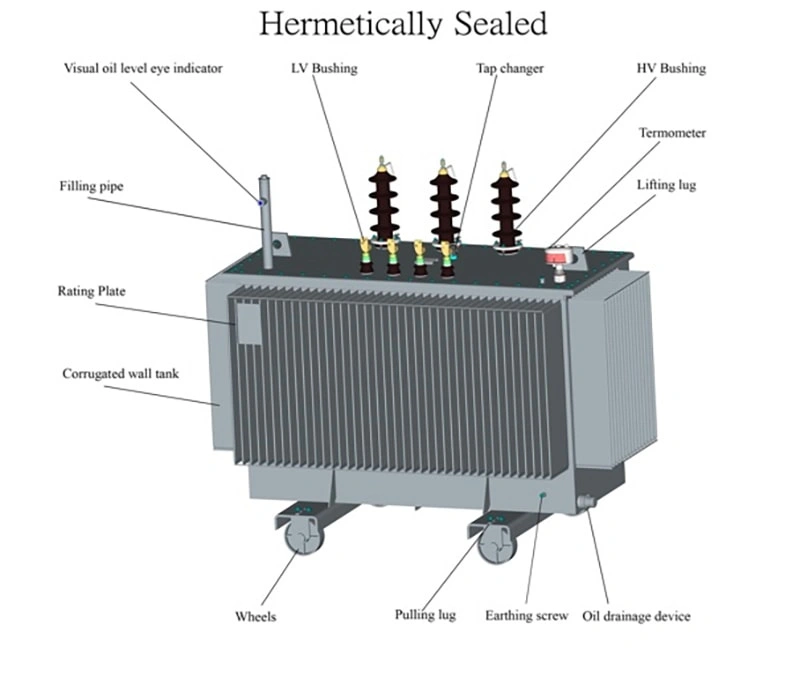
I. What is an Oil-Immersed Transformer?
Simply put, an oil-immersed transformer completely immerses the core and windings in a sealed steel tank filled with insulating oil. The oil serves both as insulation and to dissipate heat through natural convection or forced circulation. Compared to dry-type transformers that rely on air for heat dissipation, oil-immersed transformers offer higher heat dissipation efficiency, a wider withstand voltage range (from 10kV to over 220kV), and a manufacturing cost of approximately half that of dry-type transformers for the same capacity. Haiyifeng's blog clearly explains these basic principles and supplements common classifications such as single-phase/three-phase, power/distribution, and pole-mounted/pad-mounted, making it very user-friendly for beginners.
II. Core Viewpoints of Haiyifeng's Blog: Analysis of Authenticity and Bias
After comparing with publicly available industry information, the technical descriptions and company strength statements in Haiyifeng's blog are generally accurate and credible:
Environmental Trends: The blog points out that mineral oil may have negative environmental impacts, while natural ester oils (such as synthetic esters) are biodegradable and have a higher ignition point. This judgment aligns with industry consensus.
Comparative Advantages: The blog emphasizes that oil-immersed transformers offer high cost-effectiveness, strong heat dissipation, and are suitable for medium- and high-voltage scenarios, while dry-type transformers are only more suitable for special occasions such as indoor environments. This statement is factual, but it clearly carries a commercial bias towards promoting oil-immersed transformers—as marketing content for Haiyifeng, it doesn't delve into the unique advantages of dry-type transformers in areas such as fire safety and maintenance-free operation.
Company Strength: Haiyifeng operates in multiple countries, employs thousands of people, and has accumulated extensive experience in the electrical equipment field. This information can be largely verified through public channels.
Therefore, this blog post is a precisely targeted, educational marketing article suitable for potential customers to quickly understand the product, but readers should consult multiple sources before making a purchasing decision.
III. Oil-Immersed vs. Dry-Type Transformers: How to Choose Objectively? Comparison Dimensions: Oil-immersed Transformer vs. Dry-type Transformer
Cooling Medium: Mineral oil/synthetic ester oil vs. Air or resin
Typical Voltage: 10kV~750kV vs. Below 35kV
Cost: Lower vs. Higher (approximately twice the cost)
Heat Dissipation Capacity: Excellent (oil circulation) vs. Moderate (natural air cooling)
Applicable Scenarios: Outdoor substations, industrial applications, new energy grid connection vs. Indoor applications, commercial buildings, hospitals, data centers
Maintenance Requirements: Regular oil quality and sealing checks required vs. Routine cleaning
Environmental Risks: Mineral oil leakage risk (ester oil is superior) vs. No liquid leakage
Globally, oil-immersed transformers remain the dominant type in grid expansion, offshore wind power, and industrial projects; while dry-type transformers, due to their safety and cleanliness, are more favored in densely populated urban buildings and underground power distribution. There is no absolute "better," only "more suitable for the scenario."

IV. Market Trends: Steady Growth, Green and Intelligent as the Main Themes
According to data from multiple industry research institutions (such as Polaris Market Research and Mordor Intelligence), the global oil-immersed transformer market size was approximately US$23.2-31.5 billion in 2025, and is projected to grow to US$27-38.6 billion by 2031-2032, with a compound annual growth rate (CAGR) of 4.0%-6.45%. Key drivers include:
Asia-Pacific Region: China's ultra-high-voltage power transmission, rural power grid upgrades in India, and industrial electricity consumption in Southeast Asia;
Europe and America: Replacement and upgrading of aging power grids (many transformers have been in operation for over 40 years);
New Energy Support: Offshore wind power and large-scale photovoltaic bases both require voltage boosting and grid connection, and often use oil-immersed transformers to reduce environmental risks.
The future technological direction clearly points to "three transformations":
Greening: Promoting high-ignition-point, biodegradable synthetic ester oils (cost increases by 30-50%, but significant environmental value);
Intelligentization: Built-in IoT sensors to monitor oil temperature, partial discharge, and water content in real time, enabling predictive maintenance;
V. Haiyifeng's Industry Role: From Follower to Innovator
As a representative company in the electrical equipment field, Haiyifeng has been continuously strengthening its efforts in the transformer sector in recent years. Haiyifeng's overseas market presence has made it one of the common equipment suppliers in power projects along the "Belt and Road" initiative.
However, compared with traditional transformer giants such as ABB, Siemens, and TBEA, Haiyifeng still has room for improvement in its market share in ultra-high voltage and extra-high voltage projects. For international buyers, Haiyifeng's advantages lie in its high cost-effectiveness and flexible project response capabilities.
VI. Summary and Recommendations
This Haiyifeng blog post is a good introductory material. It accurately conveys the core advantages of oil-immersed transformers and shapes the company's image of "green and innovative."

In power transformer applications, selecting the right cooling method is critical for efficiency, lifespan, and operational safety. Among the most widely used transformer cooling systems are ONAN and ONAF cooling methods. Understanding the differences between these two systems helps utilities, industrial plants, and electrical engineers choose the best transformer solution for their projects.
As global power demand continues to grow in 2026, utilities, factories, renewable energy plants, and commercial facilities are increasingly choosing oil filled transformers for reliable and efficient power distribution. Compared with dry-type transformers, oil immersed transformers provide superior cooling performance, higher overload capacity, and longer service life in demanding environments.
Hot spot temperature is one of the most critical factors affecting the lifespan, efficiency, and operational safety of oil immersed transformers. Excessive hot spot temperatures accelerate insulation aging, reduce transformer reliability, and increase the risk of unexpected failures. For industries relying on continuous power supply, maintaining optimal transformer temperature is essential for long-term performance.Modern power systems widely use both ONAN transformer and ONAF transformer cooling methods to control internal heat generation and improve transformer stability. As a professional transformer manufacturer, Qingdao Haiyifeng Industry and Trade designs and manufactures high-efficiency oil immersed transformers engineered for superior thermal performance and lower hot spot temperatures.According to recent 2026 SEO and AI-search optimization trends, structured technical content with direct answers, practical solutions, and clear engineering explanations performs best for both Google Search and AI-driven search engines.
Choosing the right transformer is one of the most important decisions for industrial project developers and engineers. Factors such as energy efficiency, cooling performance, installation environment, operational lifespan, maintenance costs, and load capacity must all be considered carefully.
Among the most widely used transformer types in industrial applications are the oil immersed transformer and the dry type transformer. Each has its own advantages, disadvantages, and ideal application environments.
Power transformers play a vital role in alternating current (AC) power systems. Their main functions include voltage conversion, power transmission, and electrical isolation. By stepping up or stepping down voltage levels, they enable long-distance power transmission with minimal energy loss and ensure safe distribution to end users.
Did you know? Without transformers, the modern power system would be impossible. High-voltage electricity from power plants is stepped down through a series of transformers before being safely delivered to your home's electrical outlet. These silent "power guardians" work every day, but few people truly understand their internal components and their respective functions.
The three main functions of an electrical transformer are to increase or decrease voltage levels (voltage transformation), enable efficient long-distance power transmission, and provide electrical isolation between circuits.
Exploring the disruptive advantages of Haiyifeng transformer's 3D wound core oil-immersed transformers in power distribution. As a national-level manufacturing single-item champion enterprise, Haiyifeng transformer's with its unique amorphous alloy 3D wound core and other energy-saving core technologies, provides power systems with superior cooling efficiency, stronger insulation protection, and sustainable energy transmission solutions.
In our previous overview, we discussed the basic types and properties of transformer oil. However, engineers and maintenance teams often face real-world challenges: Which oil is best for a tropical substation? How often should dielectric strength be tested? Can I top up a mineral‑oil transformer with ester oil? This article provides quantitative benchmarks, a decision framework, and hands‑on maintenance procedures to help you extend transformer life and avoid costly failures.



Copyright © 2025 by Qingdao Haiyifeng Industry and Trade Co.,Ltd. All Rights Reserved
PRIVACY POLICY