1. Introduction: Why a Practical Guide Matters
In our previous overview, we discussed the basic types and properties of transformer oil. However, engineers and maintenance teams often face real-world challenges: Which oil is best for a tropical substation? How often should dielectric strength be tested? Can I top up a mineral‑oil transformer with ester oil? This article provides quantitative benchmarks, a decision framework, and hands‑on maintenance procedures to help you extend transformer life and avoid costly failures.
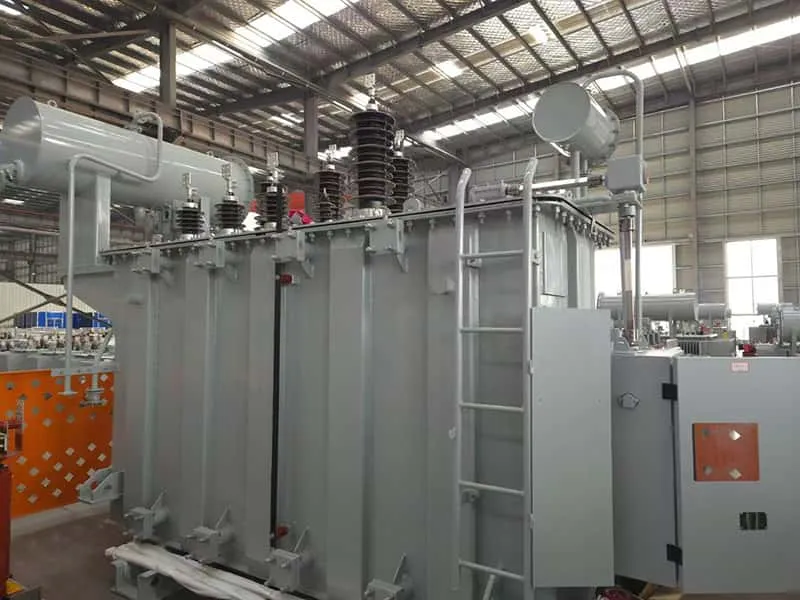
2. Key Performance Parameters at a Glance
The table below compares four common transformer oils using typical values (IEC / ASTM standards). Always consult the manufacturer’s datasheet for exact specifications.
Key takeaways:
Natural esters offer fire safety and biodegradability but higher viscosity (slower cooling) and lower oxidation stability.
Silicone oil excels in fire resistance and low‑temperature performance but is expensive and non‑biodegradable.
Mineral oil remains the most cost‑effective choice for standard applications with proper maintenance.
3. Decision Framework: Which Oil for Which Scenario?
Use the flow‑chart logic below (simplified for text):
1. Fire risk requirement?
- Indoor / densely populated area / high‑altitude substation → Consider ester or silicone oil (flash point >300°C).
- Otherwise → Mineral oil is acceptable.
2. Environmental sensitivity?
- Near water bodies / agricultural land / strict spill regulations → Prefer natural ester (biodegradable).
- No special requirement → Mineral or synthetic ester.
3. Ambient temperature extremes?
- Below –30°C → Avoid paraffinic mineral oil (high pour point). Use naphthenic, silicone, or synthetic ester.
- Hot climate (above 40°C) → Paraffinic mineral oil (low evaporation) or ester (but check viscosity – overheating may reduce cooling).
4. Load and overloading cycles?
- Frequent overloads / high thermal stress → Ester oils (higher flash point, better moisture tolerance). Mineral oil requires strict load management.
5. Existing transformer type?
- Sealed / hermetically sealed → Any type acceptable.
- Open breather (with silica gel) → Mineral oil preferred; esters absorb moisture more slowly but also release it slowly – consult OEM.
4. Common Problems & Oil‑Based Failure Indicators
4.1 Moisture Ingress
- Effect: Lowers dielectric strength; accelerates paper degradation.
-Quantitative alarm limits (IEC 60422):
- ≤ 10 ppm for > 345 kV
- ≤ 15 ppm for 170–345 kV
- ≤ 25 ppm for 72.5–170 kV
- ≤ 35 ppm for ≤ 72.5 kV
4.3 Sludge and Acidity
- Acidity (mg KOH/g):
- < 0.1 – good
- 0.1–0.2 – monitor
- > 0.2 – oil reclamation recommended
- > 0.5 – immediate action (risk of sludge deposition on windings)
5. Maintenance and Handling: Step‑by‑Step Guidance
5.1 Oil Sampling (Avoid common mistakes)
- Use a clean, dry glass or plastic syringe (never from a used container).
- Sample from the bottom valve after flushing at least 1–2 litres.
- Avoid sampling in rainy or very humid weather.
- Send to lab within 48 hours, or store sealed in dark, cool place.
5.2 Filtration / Degassing
- When: Dielectric strength < 30 kV for ≤ 170 kV transformers; < 40 kV for higher voltages.
- Method: Vacuum filtration at 60–70°C, with a 5–10 μm absolute filter.
- Target after filtration: ≥ 50 kV, moisture < 10 ppm.
5.3 Oil Reclamation (Full regeneration)
- Used for aged oil with high acidity (> 0.2 mg KOH/g) or dark colour.
- Process: Adsorption (e.g., Fuller’s earth, activated alumina) + vacuum degassing.
- Cost‑benefit: 30–50% of new oil cost; extends oil life by 5–10 years.
5.4 Topping Up – Critical Compatibility Warning
Mineral oil + Natural ester = DO NOT MIX without testing
- Mixing can cause sludge precipitation, increased acidity, and reduced dielectric strength.
- If you must top up, change at least 5–10% of the oil volume and run compatibility tests (ASTM D3455).
- Safe rule: Always use the same base oil type. If unknown, replace oil entirely.
6. Case Example: When Top‑Up Went Wrong
Scenario: A 20 MVA distribution transformer originally filled with naphthenic mineral oil was topped up with 200 litres of natural ester (because the storeroom ran out of mineral oil).
Result after 6 months: Dielectric strength dropped from 52 kV to 28 kV; sludge blocked cooling channels; winding hot spot rose by 15°C.
Root cause: The ester dissolved polar oxidation byproducts from the old mineral oil, increasing conductivity and acidity.
Lesson: Never mix different oil families. If ester is desired, drain, flush, and refill completely.
7. Emerging Trends in Practical Application
Online DGA monitors (e.g., photoacoustic spectroscopy) – now cost‑effective for transformers > 10 MVA. Provides real‑time alerts for incipient faults.
- Nano‑modified oils (TiO₂, Al₂O₃ nanoparticles) – under field trial; can increase thermal conductivity by 10–20%. Not yet standardized; use with caution.
- Condition‑based oil regeneration – Instead of fixed intervals, regeneration is triggered by acidity (>0.2) or DGA trends. Reduces waste and cost.
8. Conclusion
Choosing and maintaining transformer oil is not a “set and forget” task. By using quantified property tables, a logical selection framework, and rigorous maintenance procedures (sampling, filtration, compatibility checks), you can significantly reduce transformer failure rates. Always remember: the oil is the lifeblood of the transformer – treat it with the same care as the windings themselves.

In power transformer applications, selecting the right cooling method is critical for efficiency, lifespan, and operational safety. Among the most widely used transformer cooling systems are ONAN and ONAF cooling methods. Understanding the differences between these two systems helps utilities, industrial plants, and electrical engineers choose the best transformer solution for their projects.
As global power demand continues to grow in 2026, utilities, factories, renewable energy plants, and commercial facilities are increasingly choosing oil filled transformers for reliable and efficient power distribution. Compared with dry-type transformers, oil immersed transformers provide superior cooling performance, higher overload capacity, and longer service life in demanding environments.
Hot spot temperature is one of the most critical factors affecting the lifespan, efficiency, and operational safety of oil immersed transformers. Excessive hot spot temperatures accelerate insulation aging, reduce transformer reliability, and increase the risk of unexpected failures. For industries relying on continuous power supply, maintaining optimal transformer temperature is essential for long-term performance.Modern power systems widely use both ONAN transformer and ONAF transformer cooling methods to control internal heat generation and improve transformer stability. As a professional transformer manufacturer, Qingdao Haiyifeng Industry and Trade designs and manufactures high-efficiency oil immersed transformers engineered for superior thermal performance and lower hot spot temperatures.According to recent 2026 SEO and AI-search optimization trends, structured technical content with direct answers, practical solutions, and clear engineering explanations performs best for both Google Search and AI-driven search engines.
Choosing the right transformer is one of the most important decisions for industrial project developers and engineers. Factors such as energy efficiency, cooling performance, installation environment, operational lifespan, maintenance costs, and load capacity must all be considered carefully.
Among the most widely used transformer types in industrial applications are the oil immersed transformer and the dry type transformer. Each has its own advantages, disadvantages, and ideal application environments.
Power transformers play a vital role in alternating current (AC) power systems. Their main functions include voltage conversion, power transmission, and electrical isolation. By stepping up or stepping down voltage levels, they enable long-distance power transmission with minimal energy loss and ensure safe distribution to end users.
Did you know? Without transformers, the modern power system would be impossible. High-voltage electricity from power plants is stepped down through a series of transformers before being safely delivered to your home's electrical outlet. These silent "power guardians" work every day, but few people truly understand their internal components and their respective functions.
The three main functions of an electrical transformer are to increase or decrease voltage levels (voltage transformation), enable efficient long-distance power transmission, and provide electrical isolation between circuits.
Exploring the disruptive advantages of Haiyifeng transformer's 3D wound core oil-immersed transformers in power distribution. As a national-level manufacturing single-item champion enterprise, Haiyifeng transformer's with its unique amorphous alloy 3D wound core and other energy-saving core technologies, provides power systems with superior cooling efficiency, stronger insulation protection, and sustainable energy transmission solutions.
In our previous overview, we discussed the basic types and properties of transformer oil. However, engineers and maintenance teams often face real-world challenges: Which oil is best for a tropical substation? How often should dielectric strength be tested? Can I top up a mineral‑oil transformer with ester oil? This article provides quantitative benchmarks, a decision framework, and hands‑on maintenance procedures to help you extend transformer life and avoid costly failures.



Copyright © 2025 by Qingdao Haiyifeng Industry and Trade Co.,Ltd. All Rights Reserved
PRIVACY POLICY