Oil-immersed transformers are indispensable core equipment in electrical power systems, widely used in the generation, transmission, and distribution of electricity. By using transformer oil for cooling and insulation, these transformers can maintain stable operation under high electrical loads, making them critical for the safety of industrial, commercial, and residential power supply.
1. What Is an Oil-Immersed Transformer?
An oil-immersed transformer is a type of power transformer in which the core and windings are completely submerged in insulating oil (typically mineral oil). The oil serves both as an insulating medium and as a coolant, helping to dissipate the heat generated when electric current flows through the windings.
These transformers are commonly used in high-voltage applications, with typical installations in large substations – where high-voltage electrical energy needs to be stepped down to a lower voltage for safe delivery to end users.
2. How Do Oil-Immersed Transformers Work?
The basic operating principle of an oil-immersed transformer is the same as that of any other transformer: electromagnetic induction. When an alternating current flows through the primary winding, it creates an alternating magnetic field, which induces a current in the secondary winding, thereby changing the voltage level.
Operating steps:
1. A high voltage is applied to the primary winding.
2. The primary current generates an alternating magnetic field that passes through the core and induces an electromotive force in the secondary winding.
3. The secondary winding outputs the desired voltage, typically lower than the primary voltage, to suit various industrial and residential applications.
What distinguishes an oil-immersed transformer from other types is its cooling method. The transformer oil performs two main functions:
Insulation: Electrically isolates the windings from the metal tank, preventing short circuits.
Cooling: Absorbs heat generated during energy conversion and dissipates it to the tank walls or radiators through natural or forced circulation of the oil, releasing the heat to the surrounding environment.
3. Design and Construction
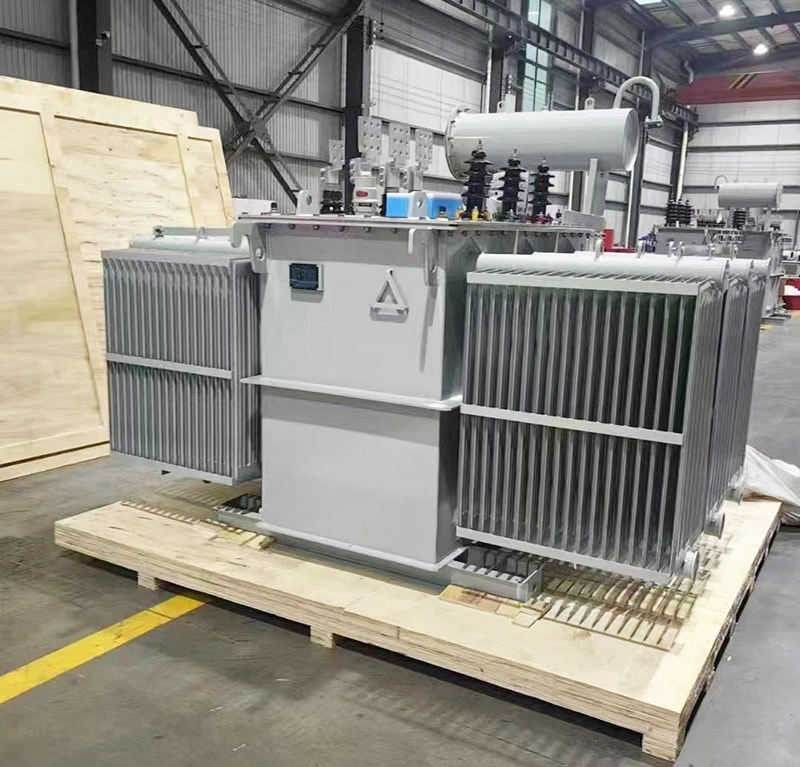
The typical construction of an oil-immersed transformer includes the following components:
Core: Made of stacked, high-permeability cold-rolled silicon steel laminations to reduce eddy current and hysteresis losses, providing a low-reluctance path for magnetic flux.
Windings: Typically wound from copper or aluminum conductors. The primary winding is connected to the high-voltage input, and the secondary winding delivers the low-voltage output. Insulating materials separate the windings from each other and from the core.
Tank: The entire core and winding assembly is sealed inside a steel tank filled with transformer oil. The tank provides mechanical protection and participates in heat exchange.
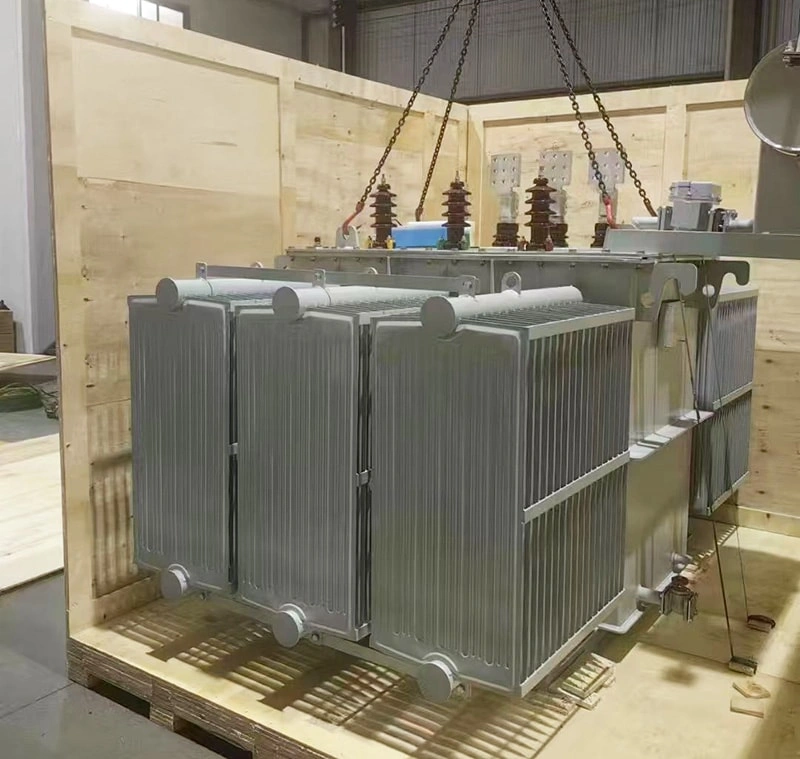
Radiators: Mounted on the outside of the tank or arranged separately to increase the heat dissipation surface area, allowing the oil to release heat effectively as it circulates.
Bushings: Used to safely connect the internal electrical leads to the external power grid while maintaining the integrity of the oil insulation system, preventing oil leakage and flashovers.
4. Key Advantages
Oil-immersed transformers offer several significant benefits:
High cooling capacity: The oil cooling system enables them to carry large currents and maintain stable performance under high-load conditions.
Safety: The oil acts as an insulating medium that effectively prevents electrical short circuits. When high-fire-point or less-flammable fluids (such as natural or synthetic esters) are used, fire safety is further enhanced.
Long service life: The oil creates a protective environment that isolates internal components from oxygen and moisture, slowing insulation aging and extending equipment life.
Efficient heat dissipation: Particularly suitable for high-ambient-temperature environments, as the oil can efficiently absorb and remove the heat generated during transformer operation.
These advantages make oil-immersed transformers the preferred choice for applications ranging from high-voltage substations to industrial facilities.
5. Typical Applications
Oil-immersed transformers are widely used in power generation and distribution systems:
Power stations: For stepping up generator output voltage to reduce transmission losses over long distances, or stepping down voltage for auxiliary power.
Substations: Reducing high transmission-level voltages (e.g., 110 kV, 220 kV) to medium voltages (e.g., 10 kV, 35 kV) or low voltages (e.g., 400 V) for supply to residential and commercial users.
Industrial facilities: Factories and large production plants rely on oil-immersed transformers to power heavy machinery, electric furnaces, and other equipment.
Renewable energy systems: In solar photovoltaic plants and wind farms, oil-immersed transformers step up the low voltage from inverters to the medium or high voltage required for grid integration, ensuring reliable connection to the power grid.
Their reliable cooling capacity and safety features make these transformers indispensable in such critical applications.
6. Safety Considerations and Maintenance
Although oil-immersed transformers are designed to be safe and reliable, regular maintenance is essential to ensure their long-term stable operation. Common maintenance practices include:
Oil quality testing and replacement: Periodically check the transformer oil for moisture, contamination, or acidification. Deteriorated oil reduces dielectric strength and can lead to partial discharges or failures. When necessary, perform oil filtration or replace the oil.
Pressure and sealing tests: Monitor the pressure inside the tank and check for leaks to ensure proper oil circulation and prevent ingress of air and moisture.
Radiator and bushing inspection: Check radiators for clogging or leakage; clean bushing surfaces and inspect for cracks or corona discharge marks to prevent flashover accidents.
Proper maintenance significantly reduces the risk of unplanned outages and ensures that the transformer operates safely throughout its design life.
Conclusion
Oil-immersed transformers are indispensable pillars of modern electrical power systems, supporting the transmission and distribution of electricity in a safe, reliable, and efficient manner. Thanks to their excellent cooling and insulation performance, these transformers play an irreplaceable role in high-voltage, high-load applications. A thorough understanding of their operating principles, structural features, application scenarios, and maintenance requirements helps engineers optimize equipment selection and operation strategies, minimize failure risks, and ensure the efficiency and stability of power delivery systems.
As global energy demand continues to grow and the share of renewable energy increases, oil-immersed transformers will continue to play a critical role in the modernization and sustainability of power infrastructure worldwide.

In power transformer applications, selecting the right cooling method is critical for efficiency, lifespan, and operational safety. Among the most widely used transformer cooling systems are ONAN and ONAF cooling methods. Understanding the differences between these two systems helps utilities, industrial plants, and electrical engineers choose the best transformer solution for their projects.
As global power demand continues to grow in 2026, utilities, factories, renewable energy plants, and commercial facilities are increasingly choosing oil filled transformers for reliable and efficient power distribution. Compared with dry-type transformers, oil immersed transformers provide superior cooling performance, higher overload capacity, and longer service life in demanding environments.
Hot spot temperature is one of the most critical factors affecting the lifespan, efficiency, and operational safety of oil immersed transformers. Excessive hot spot temperatures accelerate insulation aging, reduce transformer reliability, and increase the risk of unexpected failures. For industries relying on continuous power supply, maintaining optimal transformer temperature is essential for long-term performance.Modern power systems widely use both ONAN transformer and ONAF transformer cooling methods to control internal heat generation and improve transformer stability. As a professional transformer manufacturer, Qingdao Haiyifeng Industry and Trade designs and manufactures high-efficiency oil immersed transformers engineered for superior thermal performance and lower hot spot temperatures.According to recent 2026 SEO and AI-search optimization trends, structured technical content with direct answers, practical solutions, and clear engineering explanations performs best for both Google Search and AI-driven search engines.
Choosing the right transformer is one of the most important decisions for industrial project developers and engineers. Factors such as energy efficiency, cooling performance, installation environment, operational lifespan, maintenance costs, and load capacity must all be considered carefully.
Among the most widely used transformer types in industrial applications are the oil immersed transformer and the dry type transformer. Each has its own advantages, disadvantages, and ideal application environments.
Power transformers play a vital role in alternating current (AC) power systems. Their main functions include voltage conversion, power transmission, and electrical isolation. By stepping up or stepping down voltage levels, they enable long-distance power transmission with minimal energy loss and ensure safe distribution to end users.
Did you know? Without transformers, the modern power system would be impossible. High-voltage electricity from power plants is stepped down through a series of transformers before being safely delivered to your home's electrical outlet. These silent "power guardians" work every day, but few people truly understand their internal components and their respective functions.
The three main functions of an electrical transformer are to increase or decrease voltage levels (voltage transformation), enable efficient long-distance power transmission, and provide electrical isolation between circuits.
Exploring the disruptive advantages of Haiyifeng transformer's 3D wound core oil-immersed transformers in power distribution. As a national-level manufacturing single-item champion enterprise, Haiyifeng transformer's with its unique amorphous alloy 3D wound core and other energy-saving core technologies, provides power systems with superior cooling efficiency, stronger insulation protection, and sustainable energy transmission solutions.
In our previous overview, we discussed the basic types and properties of transformer oil. However, engineers and maintenance teams often face real-world challenges: Which oil is best for a tropical substation? How often should dielectric strength be tested? Can I top up a mineral‑oil transformer with ester oil? This article provides quantitative benchmarks, a decision framework, and hands‑on maintenance procedures to help you extend transformer life and avoid costly failures.



Copyright © 2025 by Qingdao Haiyifeng Industry and Trade Co.,Ltd. All Rights Reserved
PRIVACY POLICY