Oil-immersed transformers are one of the most widely used transformer types in power systems, extensively covering all stages from power generation and transmission to distribution. Their core feature is that the core and windings are completely immersed in insulating oil, utilizing the oil to achieve both insulation and cooling functions. This article will, based on an introduction to the basic principles, detail the key components, advantages and limitations, typical applications, and maintenance points of oil-immersed transformers, helping readers to comprehensively and objectively understand this equipment.
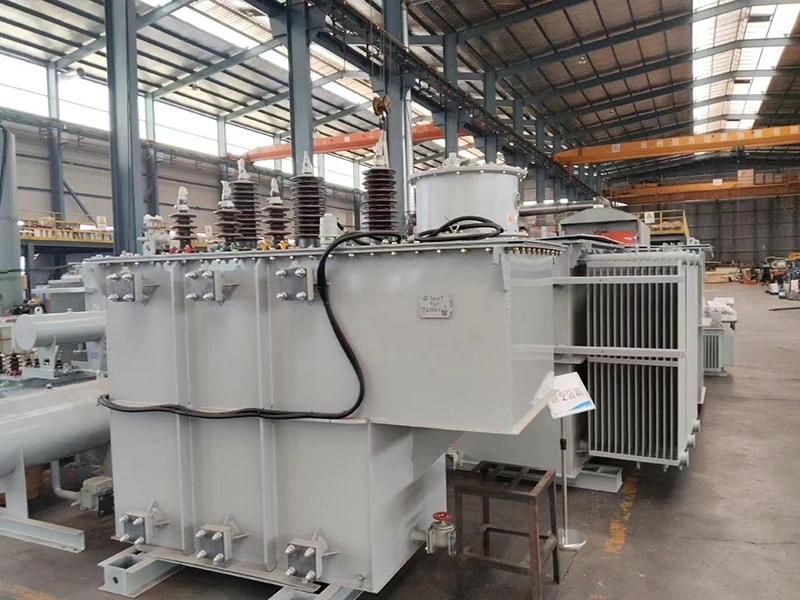
I. What is an Oil-Immersed Transformer?
An oil-immersed transformer is a closed transformer in which the core and windings (usually called the transformer body) are completely immersed in transformer oil. Transformer oil is mostly mineral oil, but natural ester oil, silicone oil, and other difficult-to-use oils can also be used. The functions of the oil include:
Insulation: Oil has a much higher dielectric strength than air, effectively isolating potential differences between windings and between windings and the grounded casing, preventing short circuits.
Cooling: Oil has high heat capacity and thermal conductivity, effectively carrying away heat generated by the windings and core, releasing it to the surrounding environment through the tank walls or external radiators.
Oil-immersed transformers are typically used in outdoor locations such as substations, pole-mounted distribution transformers, power plants, and large industrial plants. Their single-unit capacity ranges from tens of kilovolt-amperes (kVA) to thousands of megavolt-amperes (MVA), covering voltage levels from 10kV to 750kV and above.
II. Working Principle The working principle of an oil-immersed transformer is the same as that of all power transformers: electromagnetic induction.
An alternating voltage is applied to the primary winding (high-voltage side), generating an alternating current, which in turn establishes an alternating magnetic flux in the core.
This alternating magnetic flux in the core simultaneously passes through the secondary winding, inducing an electromotive force across the secondary winding according to Faraday's law of electromagnetic induction.
Voltage can be increased or decreased by selecting the turns ratio of the primary to secondary windings. The unique feature of an oil-immersed transformer lies not in its electromagnetic principles, but in its cooling and insulation methods—oil plays an irreplaceable role.
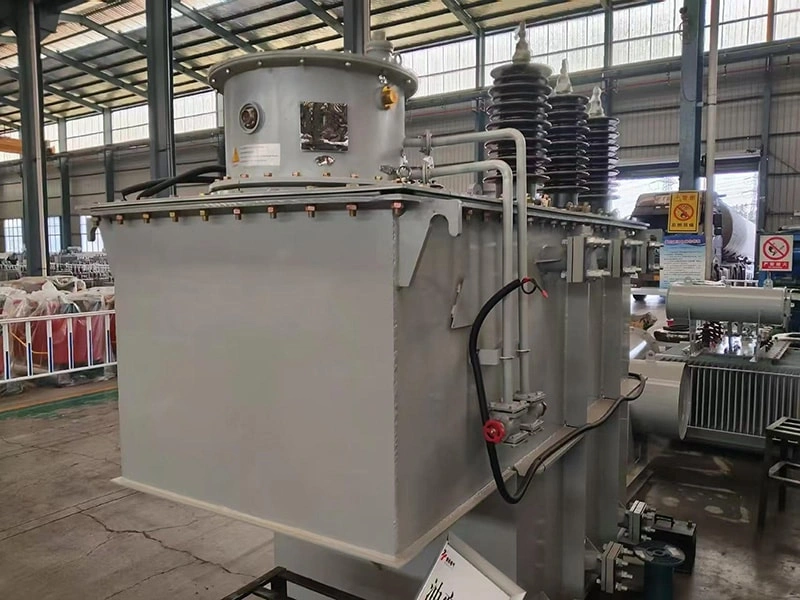
III. Key Structures and Components
In addition to the core and windings, a complete oil-immersed transformer includes the following important components. Understanding these components helps in understanding its operation and maintenance logic.
Component | Function
Core | Constructed of high-permeability silicon steel sheets to reduce eddy current losses; provides a magnetic flux loop.
Windings | Typically wound with copper or aluminum wire, carrying current. Divided into high-voltage windings and low-voltage windings.
Tank | A sealed steel container that holds the transformer body and transformer oil, and withstands oil pressure.
Transformer Oil | Insulating and cooling medium. Mineral oil is inexpensive but flammable; natural ester oil is environmentally friendly and has a high flash point.
Oil Conservator (Oil Tank) | Installed above the oil tank and connected via pipes. When oil expands and contracts with temperature, the oil conservator holds excess oil, reducing the contact area between the oil and air and delaying oxidation.
A desiccant (breather) is installed at the connection between the oil conservator and the air, and is filled with silica gel. When the oil conservator draws in air, the silica gel absorbs moisture from the air, preventing the oil from becoming damp.
A gas relay is installed on the pipe between the oil tank and the oil conservator. When a minor fault occurs inside the transformer (such as an inter-turn short circuit) generating gas, or a serious fault causes oil flow surges, the gas relay will sound an alarm or trip directly. It is the most important non-electrical protection device for oil-immersed transformers.
A radiator/cooler is a heat sink welded to the oil tank wall or an independent air-cooled/water-cooled heat exchanger, increasing the heat dissipation area so that the oil returns to the tank after cooling.
A bushing (insulating bushing) connects the winding leads to the external power grid while ensuring insulation from the oil tank casing. High-voltage bushings often use capacitive or oil-paper insulation structures.
A tap changer is used to change the effective number of turns of the winding, thereby adjusting the voltage ratio. Tap changers can be categorized into off-load tap changers (requiring power-off adjustment) and on-load tap changers (adjustable while energized).
Pressure relief valves: When an internal fault causes a sharp increase in oil pressure, the pressure relief valve quickly opens to release pressure and prevent the oil tank from bursting.
IV. Cooling Method Classification: The cooling capacity of an oil-immersed transformer determines its permissible load capacity. According to IEC 60076, common cooling designations are as follows:
ONAN (Oil-immersed self-cooled): Oil circulates naturally via convection, and heat is dissipated naturally through the heat sink. Suitable for small to medium capacity transformers.
ONAF (Oil-immersed air-cooled): A fan is installed on the radiator to force airflow over the heat sink, significantly improving cooling capacity.
OFWF (Forced oil circulation water-cooled): An oil pump forces oil to flow through an external water cooler. Suitable for large capacity transformers (such as step-up transformers in power plants).
ODAF (Forced oil-guided circulation air-cooled): Oil is forced to flow through the windings and then cooled by an air cooler, achieving the highest cooling efficiency.
Different cooling methods determine the rated capacity and overload capacity of a transformer; selection requires comprehensive consideration of ambient temperature and load curves.
V. Advantages and Limitations
Advantages:
* **Strong Heat Dissipation:** Oil has a higher specific heat capacity and thermal conductivity than air, effectively removing heat even under high loads or high ambient temperatures.
* **Good Insulation Performance:** Oil-immersed structures have high insulation strength and strong resistance to transient overvoltages, making them suitable for high voltage levels.
* **Long Service Life:** Under normal load and good maintenance, the design life of oil-immersed transformers can reach 30-40 years, and some even longer.
* **Relatively Low Cost:** For large-capacity, high-voltage applications, the manufacturing cost and total life-cycle cost of oil-immersed transformers are generally lower than those of comparable dry-type transformers.
* **Maintainability:** Oil performance can be restored through filtration, regeneration, or replacement; internal faults can be predicted through oil chromatography analysis.
Limitations (Commonly Overlooked Disadvantages):
* **Fire Risk:** Traditional mineral oil is a flammable liquid; a severe arcing fault inside the transformer could lead to fire or even explosion. Even with high flash point oils, this risk still exists.
Environmental pollution: Oil leaks can contaminate soil and groundwater, necessitating the installation of oil collection pits, dikes, and other leak prevention facilities.
High maintenance workload: Regular sampling and testing of oil parameters such as breakdown voltage, acid value, and trace water content are required; components such as oil tanks, dehumidifiers, and gas relays require periodic inspections.
Large size and weight: The oil and tank make the transformer bulky, requiring large hoisting equipment for transportation and installation, and occupying significant land.
Limited low-temperature performance: In extremely cold regions, the viscosity of ordinary mineral oil increases, affecting heat dissipation and potentially requiring special low-temperature oil or heating devices.
Noise issues: Vibrations generated by the magnetostriction of the iron core are transmitted through the oil and tank, potentially requiring soundproofing measures near residential areas.
Due to these limitations, dry-type transformers (resin-insulated or air-insulated) are often preferred for indoor use, densely populated areas, or locations with extremely high fire safety requirements (such as high-rise buildings and underground substations).
VI. Main Application Scenarios
Application Areas | Typical Uses | Common Capacities/Voltages
Power Plants | Step-up Transformers: Step up generator voltage (10.5kV~27kV) to transmission voltage (110kV~750kV) | Tens of MVA~Thousands of MVA
Transmission Substations | Step-down Transformers: Step down high voltage (220kV/110kV) to medium voltage (35kV/10kV) | 10MVA~500MVA
Distribution Transformers | Installed on poles or platforms, step down 10kV to 400V (three-phase) or 230V (single-phase) for residential/commercial use | 50kVA~2500kVA
Industrial Users | Power supply for large motors, electric furnaces, rectifiers, etc.; voltage step-down of plant distribution networks | 500kVA~20MVA
Renewable Energy Photovoltaic power plants and wind farms: The low-voltage (690V) output from the inverter is stepped up to medium voltage (10kV/35kV) and connected to the grid (1MVA~10MVA).
VII. Maintenance and Safety Points
To ensure the safe and reliable operation of oil-immersed transformers, the following routine maintenance items should be performed:
Oil Quality Testing: Perform oil sample analysis every 1-3 years, including breakdown voltage, acid value, dielectric loss, trace moisture content, and dissolved gas analysis (DGA).
Abnormally high levels of characteristic gases (such as acetylene, hydrogen, and ethylene) indicate potential internal arcing or overheating faults.
Gas Relay Inspection: Regularly check the gas relay for gas accumulation. If a light gas leak occurs, vent the gas promptly and investigate the cause.
Silica Gel Condition of the Desiccant Silica Gel: Normally, silica gel is blue (or orange). It turns pink or colorless after becoming damp and needs to be replaced or regenerated.
Bushings and Terminals: Check the bushing surface for dirt and cracks, and check the terminals for overheating discoloration.
Pressure relief valve and oil level gauge: Confirm that the oil level is within the normal range (it varies with oil temperature); the pressure relief valve is free of leaks or corrosion.
Infrared thermal imaging: Regularly perform infrared temperature measurements on the transformer body, bushing joints, radiators, etc., and promptly address any localized overheating.
Preventive tests: Including tests for insulation resistance, DC resistance, turns ratio, no-load loss, and short-circuit impedance, performed according to the equipment's standard cycle.

In power transformer applications, selecting the right cooling method is critical for efficiency, lifespan, and operational safety. Among the most widely used transformer cooling systems are ONAN and ONAF cooling methods. Understanding the differences between these two systems helps utilities, industrial plants, and electrical engineers choose the best transformer solution for their projects.
As global power demand continues to grow in 2026, utilities, factories, renewable energy plants, and commercial facilities are increasingly choosing oil filled transformers for reliable and efficient power distribution. Compared with dry-type transformers, oil immersed transformers provide superior cooling performance, higher overload capacity, and longer service life in demanding environments.
Hot spot temperature is one of the most critical factors affecting the lifespan, efficiency, and operational safety of oil immersed transformers. Excessive hot spot temperatures accelerate insulation aging, reduce transformer reliability, and increase the risk of unexpected failures. For industries relying on continuous power supply, maintaining optimal transformer temperature is essential for long-term performance.Modern power systems widely use both ONAN transformer and ONAF transformer cooling methods to control internal heat generation and improve transformer stability. As a professional transformer manufacturer, Qingdao Haiyifeng Industry and Trade designs and manufactures high-efficiency oil immersed transformers engineered for superior thermal performance and lower hot spot temperatures.According to recent 2026 SEO and AI-search optimization trends, structured technical content with direct answers, practical solutions, and clear engineering explanations performs best for both Google Search and AI-driven search engines.
Choosing the right transformer is one of the most important decisions for industrial project developers and engineers. Factors such as energy efficiency, cooling performance, installation environment, operational lifespan, maintenance costs, and load capacity must all be considered carefully.
Among the most widely used transformer types in industrial applications are the oil immersed transformer and the dry type transformer. Each has its own advantages, disadvantages, and ideal application environments.
Power transformers play a vital role in alternating current (AC) power systems. Their main functions include voltage conversion, power transmission, and electrical isolation. By stepping up or stepping down voltage levels, they enable long-distance power transmission with minimal energy loss and ensure safe distribution to end users.
Did you know? Without transformers, the modern power system would be impossible. High-voltage electricity from power plants is stepped down through a series of transformers before being safely delivered to your home's electrical outlet. These silent "power guardians" work every day, but few people truly understand their internal components and their respective functions.
The three main functions of an electrical transformer are to increase or decrease voltage levels (voltage transformation), enable efficient long-distance power transmission, and provide electrical isolation between circuits.
Exploring the disruptive advantages of Haiyifeng transformer's 3D wound core oil-immersed transformers in power distribution. As a national-level manufacturing single-item champion enterprise, Haiyifeng transformer's with its unique amorphous alloy 3D wound core and other energy-saving core technologies, provides power systems with superior cooling efficiency, stronger insulation protection, and sustainable energy transmission solutions.
In our previous overview, we discussed the basic types and properties of transformer oil. However, engineers and maintenance teams often face real-world challenges: Which oil is best for a tropical substation? How often should dielectric strength be tested? Can I top up a mineral‑oil transformer with ester oil? This article provides quantitative benchmarks, a decision framework, and hands‑on maintenance procedures to help you extend transformer life and avoid costly failures.



Copyright © 2025 by Qingdao Haiyifeng Industry and Trade Co.,Ltd. All Rights Reserved
PRIVACY POLICY