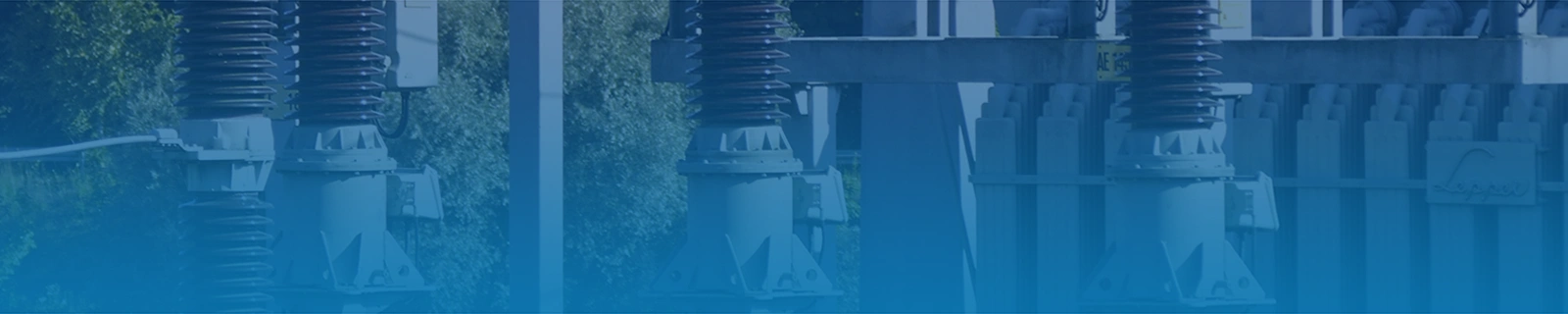
Among the most widely used transformer types in industrial applications are the oil immersed transformer and the dry type transformer. Each has its own advantages, disadvantages, and ideal application environments.
Power transformers play a vital role in alternating current (AC) power systems. Their main functions include voltage conversion, power transmission, and electrical isolation. By stepping up or stepping down voltage levels, they enable long-distance power transmission with minimal energy loss and ensure safe distribution to end users.
Oil-immersed transformers are indispensable core equipment in electrical power systems, widely used in the generation, transmission, and distribution of electricity.
In power systems, transformers play a critical role in voltage conversion and power distribution. Among them, oil-immersed transformers stand out for their excellent heat dissipation, high overload capacity, and environmental adaptability. They are widely used in substations, industrial and mining enterprises, renewable energy projects, and outdoor distribution networks. As a professional electrical equipment supplier, Haiyifeng is committed to delivering high-performance, highly reliable oil-immersed transformer solutions to support global power infrastructure development.
Oil-immersed transformers are one of the most widely used transformer types in power systems, extensively covering all stages from power generation and transmission to distribution. Their core feature is that the core and windings are completely immersed in insulating oil, utilizing the oil to achieve both insulation and cooling functions. This article will, based on an introduction to the basic principles, detail the key components, advantages and limitations, typical applications, and maintenance points of oil-immersed transformers, helping readers to comprehensively and objectively understand this equipment.
A dry-type transformer is a transformer whose core and windings are not immersed in insulating oil. Its high- and low-voltage windings are made of copper strip (foil) and then cast with epoxy resin in a vacuum and cured, forming a high-strength solid insulation structure. As a core piece of equipment in modern electrical systems, dry-type transformers are widely used in high-rise buildings, airports, subways, data centers, and industrial parks—places with strict fire and explosion protection requirements—due to their safety, environmental friendliness, and maintenance-free characteristics.



Copyright © 2025 by Qingdao Haiyifeng Industry and Trade Co.,Ltd. All Rights Reserved
PRIVACY POLICY